10th April, 2026
·
5 min read
Stars and skippers
A version of this article first appeared in the Sunday, 22nd March, 2026 issue of The Sunday Post. All photographs by James Lee.

In 1960s Florida, Nasa scientists running the Apollo missions contended with freak fires, relatively infantile micro computers and the growing political pressures of a Cold War space race. They did not, however, have to deal with fishermen.
Richard Gray has been creeling, casting and potting off the craggy, northernmost edges of Unst, Shetland’s northernmost inhabited island, since 2000 — long before plans for a rocket launch site were first proposed on the cliffs above his creels in 2018. And while excitement builds towards lift-off, he and his crew have their own daily countdown to worry about.
“As soon as you leave the pier the clock is ticking,” said Gray, who races each catch back to land in time for the buckets of live crabs to ride a series of three ferries to Aberdeen. No-go zones around the launch site for each lift-off threaten not just to rob Gray and other skippers of a catch, he said, but to stop their shell fish making appointments with chefs across the mainland.
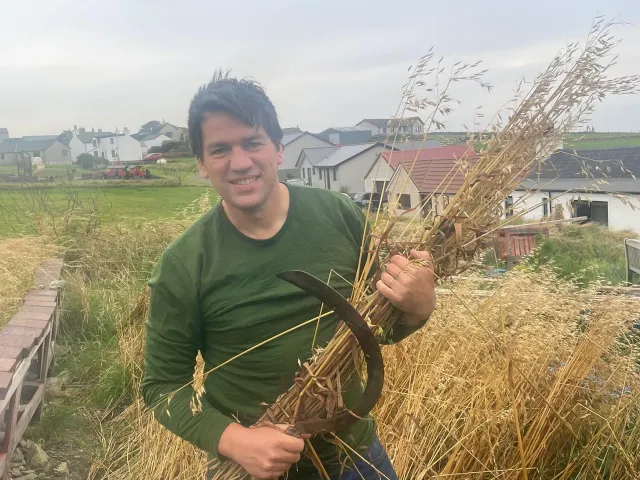
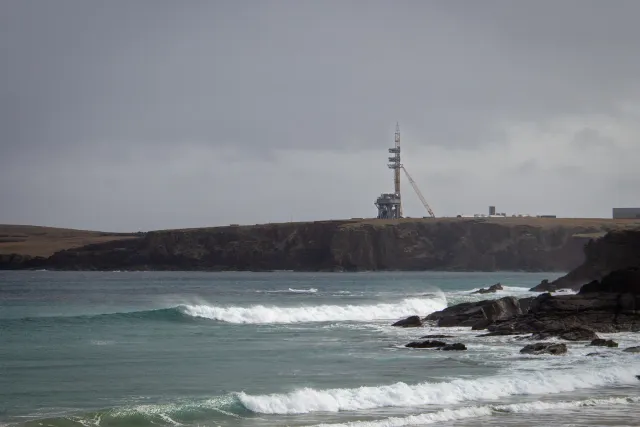
SaxaVord is Britain’s first vertical rocket launch site. One of only two in Europe, it represents a meaningful opportunity to make Scotland a leader in space launches. With a test launch expected in “a few weeks” and commercial lift-off in the summer, some locals on remote Unst sense an opportunity. But for others the success of a rural rocket launch will be judged by how well it fits around collecting creels Local fishermen Raymond Strachan and Richard Gray. and breeding seasons for ground nesting birds.
A photographer, James, and I travelled to Unst to measure the mood before lift-off, from skippers like Gray, up to the spaceport’s spindly yellow launch scaffolding itself. Or at least as far as we could, along SaxaVord’s freshly tarmacked driveway and up to two final signs: “No unauthorised visitors. Any aliens will be reported to the Space Police” and “Drive slowly, sheep on road”.

Some local businesses are looking for ward to launch day. Patricia Burns runs the Final Checkout cafe and petrol station (Both of which are Britain’s most northerly). She said the spaceport and its company fuel account now represent a significant portion of her bottom line.
Just south in Baltasound, building company Sandisons has gained from a contract supplying the spaceport, and is guardedly optimistic about visitors to the island’s bakery, which it also runs. “We’ll do well out of it; I’ll be out there with a sandwich tray,” said James Gunning, from Sandisons’ offices down by a small harbour. “All in all it’s a really good thing. They’re just poor at communicating, which is a shame.”
SaxaVord last launched into head lines in August 2024 when an engine test went up in a dramatic plume of flames. Living just outside the exclusion zone, the Spence family were close enough to watch the fireball out of their kitchen window. Or they would have been, had they been told a test was scheduled.

“I had no idea. I was in the other room,” said Belle Spence. “I hope the next one lands in my garden,” she laughed. “I might get a new house.” Accusations that spaceport staff were failing to properly keep locals in the loop mounted into a report published by campaign group Spacewatch last September. Their interviews with locals, according to one of the report’s authors Peter Burt, spoke to tempered support for the spaceport but “disappointment and disgruntlement” about its operators.
“The spaceport’s activities can be expected to have significant consequences for Unst islanders, and so the spaceport has an obligation to communicate with them meaningfully and in good faith,” said Burt. “Clearly this is not currently happening, which is a concern.”
SaxaVord declined to put anyone up to be interviewed but said in a statement that a visitor management plan “will be rolled out” when a test flight window is confirmed. “Just last week we set out to Unst Community Council and the wider Shetland community how this will work in general terms, with specifics to follow in the months ahead,” it added.
“As far as fishing is concerned we have had regular engagement with both the Shetland Fishermen’s Association and the Scottish Fishermen’s Federation over the past year, and fishermen can be assured that there will be minimal disruption to their activities. Again, once we know the launch window timetable we will be in touch with detailed information.”
The northerly reaches of Shetland are no stranger to industry. In the past islanders here have benefited not just from jobs, but era-defining community benefit agreements. Driving to the first of two island-hopping ferries north takes you past Sullom Voe terminal, the centre of a 1970s oil boom which still keeps a community trust flush with cash today. Belle herself worked at an old RAF radar station overlooking SaxaVord until it closed in 2006, and now the Spences say Unst has salmon farms to thank for keeping it on the map.
Initially the space port’s CEO Frank Strang was a familiar face around Unst, according to Belle’s husband, Willie. “He did tell you porkies, but he would always speak to you at least.” Then, in August, Strang died of cancer. When James and I duck into Haroldswick Kirk (again, Britain’s most northerly) to dodge a pelting hail storm we find a visitor book. “Unst will be richer due to your dogged efforts,” reads one of a run of dedications to the stargazing entrepreneur.
“There’s been a wee bit of a break down with the local community since then, which I think is unnecessary,” said Belle and Willie’s son, Lenard, visiting his parents for lunch during an off week from his job at Sullom Voe.
Earlier this month SaxaVord announced that this year’s launches will be live-streamed, and that priority for 600 viewing passes will go to Unst residents. After an unavoidable initial clamour, it remains to be seen how many of the port’s 30 annual launches will draw crowds to Britain’s furthest flung island.
Meanwhile, Shetland’s skippers are drawing up their own plans for launch day. “I’m hoping to go and get right in the middle of it,” said another shellfish skipper, Raymond Strachan. “I think we’ll have to get in the way just to make our point.”